In-House vs Outsourcing Software Development
Choosing the right software development approach is vital. This article explores in-house vs outsourcing software development, highlighting differences, benefits, and challenges. Learn how to decide based on cost, control, talent, scalability, and project needs.
 Babar Al-Amin

Choosing the right approach for software projects is crucial for companies seeking efficiency and high-quality results. Many businesses face the dilemma of in-house vs outsourcing software development, which significantly impacts cost, timeline, and control. In-house development provides full control over teams, processes, and security, but often requires larger budgets and longer timelines.
Outsourcing software development allows access to global expertise, faster delivery, and flexibility while potentially reducing costs and operational complexity. Understanding the key differences between these approaches helps decision-makers select a solution. In this article, we will explore the key differences, benefits, and considerations of both approaches in depth. Let’s dive in.
What Is In‑House Software Development?
In‑house software development means building and managing your own internal team for software projects. Your company hires developers, designers, and testers to work full-time on your products. This model gives direct control over priorities, communication, and quality. It also keeps sensitive data and intellectual property inside your organization. In‑house teams often align more closely with business goals and culture.
What Is Outsourcing Software Development?
Outsourcing software development means hiring a third‑party team or company to build your software instead of using your internal team. This approach gives access to a global talent pool and lets businesses scale faster. Outsourcing can reduce costs and speed up delivery. It also allows your company to focus on core tasks while experts handle development.
In-House vs Outsourcing Software Development: Key Differences
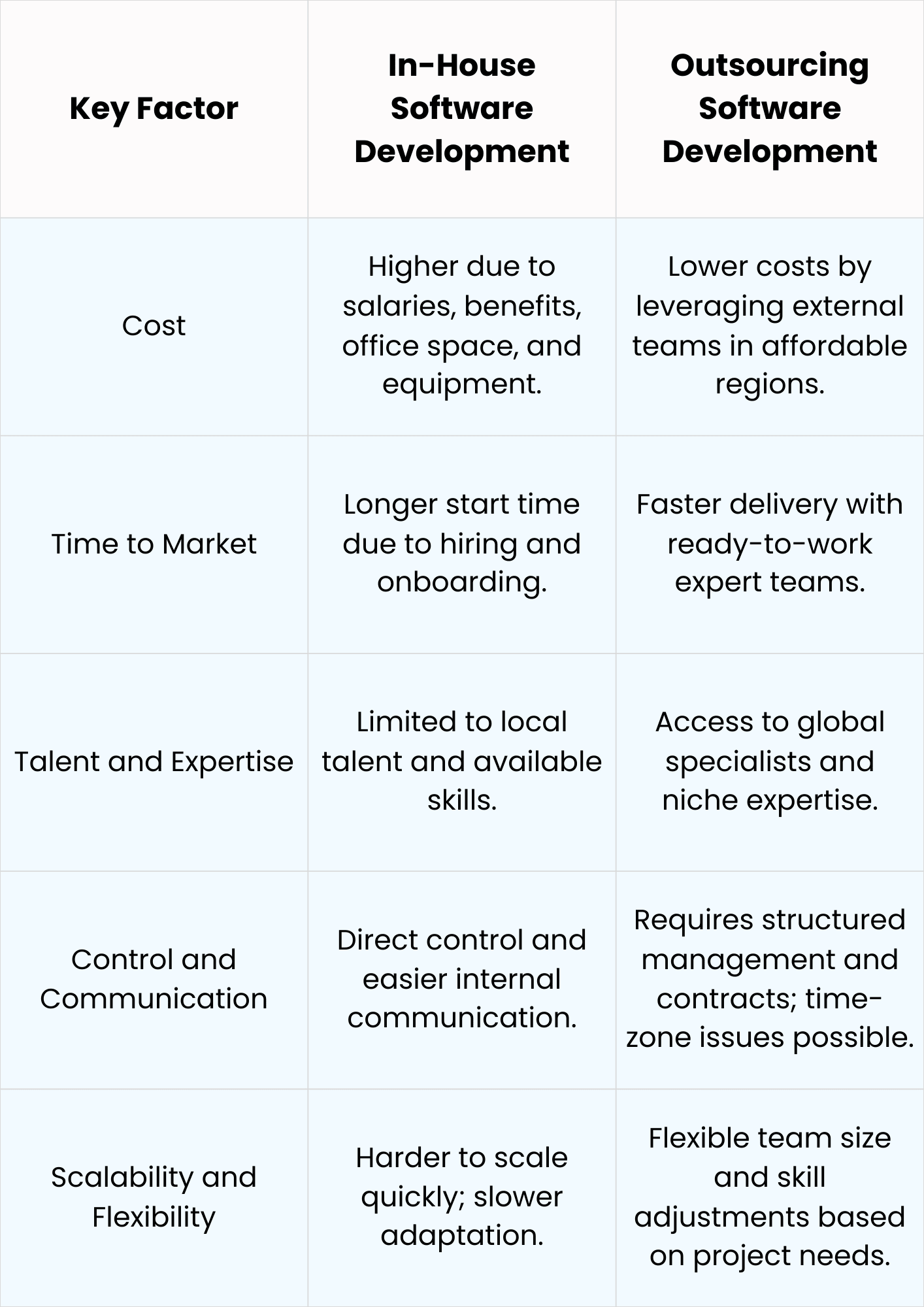
Choosing between in-house and outsourcing software development depends on multiple factors, including cost, speed, talent, control, and project goals. Understanding these differences helps companies make smarter decisions.
1. Cost
In-house software development often involves higher costs due to salaries, benefits, office space, and equipment. Outsourcing usually reduces expenses by leveraging external teams in cost-effective regions. Budget constraints often make outsourcing attractive for startups and small businesses seeking quality results without heavy upfront investment.
2. Time to Market
In-house teams may take longer to start projects because hiring and onboarding require time. Outsourcing allows faster delivery by engaging ready-to-work experts who already have the necessary skills. This speed is especially useful for companies needing rapid product launches or tight deadlines.
3. Talent and Expertise
In-house teams are limited to local talent, which may restrict skill availability. Outsourcing gives access to a global talent pool with diverse experience. Companies can find specialists for niche technologies or scale the team quickly based on project requirements.
4. Control and Communication
In-house development ensures direct control over processes, priorities, and workflow. Communication is easier within the same organization. Outsourcing introduces layers of coordination and sometimes time-zone challenges, requiring clear contracts and management practices to maintain project quality.
5. Scalability and Flexibility
Scaling an in-house team requires time and investment, making it less flexible for sudden project expansions. Outsourcing allows companies to quickly adjust team size or skill sets to meet changing project demands, providing operational flexibility without long-term commitments.
Pros and Cons of In-House Software Development
Choosing in-house software development has clear advantages and disadvantages. Understanding them helps companies make informed decisions based on cost, control, and project needs.
Pros of In-House Software Development
- Full Control: Teams work directly under your management, ensuring alignment with business goals and priorities.
- Better Communication: Internal teams reduce misunderstandings and improve collaboration.
- Security and Confidentiality: Sensitive data and intellectual property remain within the company.
- Cultural Alignment: Employees understand your company culture and vision, leading to better project cohesion.
Cons of In-House Software Development
- Higher Costs: Salaries, benefits, and infrastructure increase overall expenses.
- Limited Talent Pool: Hiring specialized skills locally can be challenging.
- Scaling Challenges: Expanding the team takes time and additional investment.
- Slower Time to Market: Onboarding and internal processes can delay project delivery.
Pros and Cons of Outsourcing Software Development
Outsourcing software development offers unique benefits and some drawbacks. Evaluating them helps companies choose the right approach for budget, speed, and access to global expertise.
Pros of Outsourcing Software Development
- Cost Efficiency: Outsourcing significantly reduces operational and staffing expenses.
- Access to Global Talent: Companies can easily hire specialists in niche technologies.
- Faster Delivery: Ready-to-work teams accelerate project timelines.
- Scalability and Flexibility: Teams can expand or contract quickly based on project needs.
Cons of Outsourcing Software Development
- Less Direct Control: Managing external teams can be challenging.
- Communication Barriers: Time zones and language differences may affect collaboration.
- Security Risks: Sensitive data may be exposed if contracts are weak.
- Dependency on Third-Party: Companies rely on external providers for project success.
How to Decide Between In-House and Outsourcing Software Development
Choosing between in-house vs outsourcing software development depends on project needs, budget, and long-term strategy. Companies must evaluate multiple factors before deciding.
1. Assess Your Budget
Determine how much you can invest in software development. In-house teams are more expensive due to salaries and infrastructure. Outsourcing can reduce costs while maintaining quality.
2. Evaluate Project Timeline
Urgent projects may benefit from outsourcing since external teams are ready to start immediately. In-house development can take longer due to hiring and onboarding.
3. Consider Internal Expertise
Analyze if your company has the required skills. In-house teams work well with existing knowledge. Outsourcing provides access to specialists for advanced or niche technologies.
4. Determine Control Requirements
If you need full control over every step, in-house is preferable. Outsourcing requires trust, structured management, and clear communication to maintain project quality.
5. Plan for Scalability
Consider future project growth. In-house teams take time to scale. Outsourcing enables flexible adjustments to team size and skill sets as requirements change.
Partner with Experts for Your Software Development Needs
Looking for the right partner when choosing between in‑house vs outsourcing software development for your project? WorkersLab builds custom web apps, mobile apps, AI automation, and scalable cloud solutions with clarity and purpose, not corporate overhead or hype. Our boutique team focuses on real business needs and fast, reliable delivery. If you want software that works and teams that care, contact us today.
FAQs
What is the main difference between in-house vs outsourcing software development?
In-house teams are fully managed internally, providing control and alignment. Outsourcing relies on external experts, offering flexibility, faster delivery, and cost efficiency. The choice depends on budget, timeline, and project requirements.
Which is cheaper: in-house or outsourcing software development?
Outsourcing is generally more cost-effective because companies avoid salaries, benefits, and infrastructure costs. In-house development involves higher expenses but gives full control and closer alignment with internal business goals.
When should a company choose in-house development?
In-house development is ideal for projects that require high control, strict data security, or close alignment with business goals. It works best when long-term maintenance and team collaboration are priorities.
When is outsourcing software development recommended?
Outsourcing suits projects needing quick delivery, specialized expertise, or budget efficiency. It allows access to global talent and scalability while letting internal teams focus on core business activities.
Can companies use a hybrid approach?
Yes, hybrid models combine in-house control with outsourced expertise. This approach balances cost, speed, and flexibility, leveraging internal knowledge while accessing external skills for specialized tasks or temporary project needs.
Conclusion
Choosing between in-house and outsourcing software development depends on project goals, budget, and timelines. In-house offers control and cultural alignment, while outsourcing provides flexibility, cost savings, and global expertise. Evaluating your priorities ensures the right approach for success. Make informed decisions to maximize efficiency, quality, and growth in every software project.